




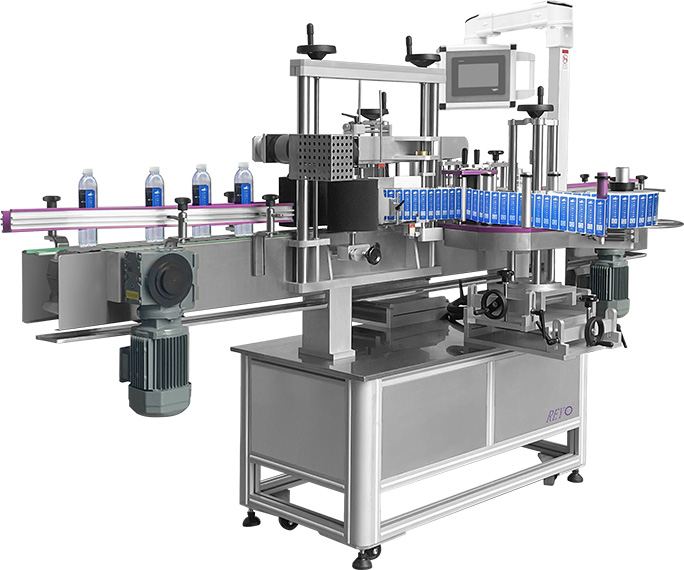
How Do Labeling Machines Improve Packaging Efficiency?
Packaging efficiency is an important factor for manufacturers that need to handle high production volumes while maintaining consistent product quality. Manual labeling can be time-consuming, labor-intensive, and difficult to keep consistent, especially when thousands of products need to be labeled every day.
So, how do labeling machines improve packaging efficiency?
A modern labeling machine can automate label feeding, positioning, application, and product handling, helping manufacturers increase production speed, reduce labor requirements, improve labeling accuracy, and maintain consistent packaging quality.
Depending on the product, label material, container shape, and production requirements, manufacturers can choose different solutions, including Self-Adhesive Labeling Machines, Pressure Sensitive Labeling Machines, Hot Melt Glue Labeling Machines, and OPP Labeling Machines.
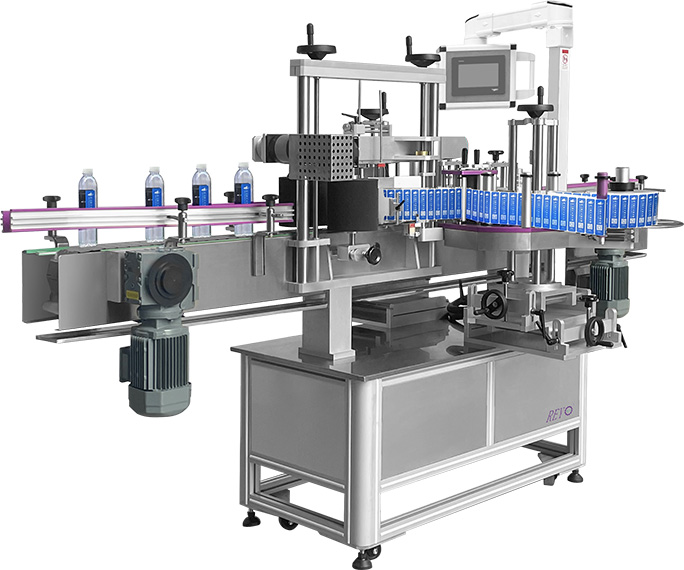
What Is a Labeling Machine?
A labeling machine is an automated packaging machine designed to apply labels accurately and consistently to products, bottles, containers, boxes, or other packages.
Depending on the labeling technology, a machine may use pressure-sensitive adhesive labels or apply adhesive during the labeling process.
For example, a self-adhesive labeling machine uses labels that already have an adhesive layer. The machine separates the label from its backing material and applies it directly to the product surface.
A hot melt glue labeling machine uses heated adhesive to bond labels to containers. This type of system is commonly used with roll-fed OPP labels in high-volume packaging applications.
Both technologies can improve packaging efficiency by replacing repetitive manual labeling operations with controlled and automated processes.
How Do Labeling Machines Improve Packaging Efficiency?
Labeling machines improve packaging efficiency in several important ways, from increasing production speed to reducing labor costs and improving label consistency.
Faster Labeling Speed
One of the most significant advantages of an automatic labeling machine is increased production speed.
Manual labeling requires operators to repeatedly pick up labels, position products, align labels, and press the labels onto the packaging. As production volume increases, these repetitive operations can become a major bottleneck.
An automated labeling system performs these processes continuously and at a controlled speed.
A high speed labeling machine can process a large number of products within a short period, making it suitable for production lines where packaging speed is critical.
The actual labeling speed depends on the machine configuration, product dimensions, label size, labeling method, and production line conditions.
Reduced Labor Requirements
Manual labeling requires workers to perform repetitive tasks for extended periods.
A fully automatic labeling machine can significantly reduce the amount of manual intervention required during the labeling process.
Operators may only need to load materials, monitor machine operation, perform routine adjustments, and conduct quality checks.
Reducing repetitive manual work can help manufacturers allocate workers to other production tasks while improving overall packaging productivity.
Improved Labeling Accuracy
Label position is an important part of packaging quality.
When labels are applied manually, their position can vary from one product to another. Problems such as crooked labels, uneven positioning, wrinkles, or incorrect placement can affect the appearance of the finished product.
A labeling machine uses controlled product handling and label application mechanisms to maintain a consistent labeling position.
Sensors, conveyors, label dispensing systems, and positioning mechanisms can work together to improve application accuracy.
This is particularly important for products that require precise branding, product information, barcodes, or regulatory labels.
Consistent Packaging Quality
Consistency is another major advantage of automated labeling.
Once the machine parameters are correctly configured, the same labeling process can be repeated across a large number of products.
This helps maintain consistent:
Label position
Label orientation
Label application pressure
Label spacing
Product handling
Overall packaging appearance
For manufacturers supplying large retail or distribution markets, consistent packaging can help create a more professional product presentation.
How Does a Self-Adhesive Labeling Machine Improve Efficiency?
A self-adhesive labeling machine, also known as a pressure sensitive labeling machine, applies labels that already contain a pressure-sensitive adhesive layer.
The machine typically feeds the product into the labeling station, separates the label from its backing liner, and applies the label to the product surface using controlled pressure.
This process can be suitable for bottles, jars, boxes, containers, and many other products.
Easy Label Application
Because the adhesive is already present on the label, the machine does not need a separate hot melt adhesive heating system.
This can simplify the labeling process for applications that use pressure-sensitive labels.
Flexible Product Applications
Self-adhesive labeling machines can be configured for different labeling requirements, including front labeling, back labeling, wrap-around labeling, and other applications.
Suitable for Different Production Volumes
Depending on the machine configuration, automatic self-adhesive labeling equipment can be used for small, medium, and high-volume production.
For manufacturers that frequently change products or labels, machine flexibility can also be an important consideration.
How Does a Hot Melt Glue Labeling Machine Improve Efficiency?
A hot melt glue labeling machine uses hot melt adhesive to bond labels to containers.
The solid adhesive is heated until it becomes molten. The adhesive is then applied to the required area, the label is positioned on the container, and the adhesive cools and solidifies to form the bond.
This rapid bonding process makes hot melt labeling suitable for continuous industrial production.
Fast Adhesive Setting
Hot melt glue can develop bonding strength as it cools, reducing the need for long drying periods.
This allows the labeled products to continue through the packaging line quickly.
Suitable for High-Speed Production
Hot melt labeling is particularly suitable for applications requiring high production throughput.
An OPP hot melt glue labeling machine can continuously feed OPP labels, apply hot melt adhesive, position the labels, and wrap them around containers.
Efficient OPP Labeling
OPP labels are widely used in beverage, food, chemical, and other packaging applications.
An OPP labeling machine can combine accurate label feeding and cutting with controlled adhesive application to produce consistent wrap-around labeling at high production speeds.
What Is the Difference Between Self-Adhesive and Hot Melt Labeling?
Both labeling technologies can improve packaging efficiency, but they work in different ways.
A self-adhesive labeling machine uses pressure-sensitive labels with adhesive already applied to the label material.
A hot melt glue labeling machine applies adhesive during the labeling process.
The best choice depends on factors such as:
Label material
Container material
Container shape
Required production speed
Label design
Adhesive requirements
Production environment
Packaging cost
Automation requirements
For manufacturers using pre-coated pressure-sensitive labels, a self-adhesive labeling machine may be the appropriate solution.
For high-volume applications using roll-fed OPP labels, a hot melt glue labeling machine may provide an efficient solution.
How Do Automatic Labeling Machines Reduce Packaging Costs?
Packaging efficiency is not only about production speed. It also involves labor, material usage, downtime, and product quality.
Lower Labor Costs
Automating repetitive labeling operations reduces the number of workers required for manual label application.
Reduced Label Waste
Accurate label dispensing and application can help reduce incorrectly positioned or damaged labels.
Less Product Rework
Consistent labeling reduces the possibility of products requiring manual correction because of poor label positioning.
Reduced Production Downtime
A properly configured automatic labeling machine can operate continuously as part of an integrated production line.
Reliable machine operation and convenient adjustment can help manufacturers maintain production efficiency.
How Do Labeling Machines Improve Production Line Automation?
A modern labeling machine does not necessarily operate as an isolated piece of equipment.
It can be integrated with other packaging equipment, such as:
Filling machines
Capping machines
Bottle washing systems
Conveyors
Inspection systems
Coding machines
Cartoning machines
Packaging machines
When connected to an automated production line, the labeling machine can receive products from the previous process and transfer labeled products to the next stage automatically.
This creates a continuous packaging workflow with fewer manual handling steps.
Why Is a Fully Automatic Labeling Machine Suitable for High-Volume Production?
A fully automatic labeling machine is designed to minimize manual intervention throughout the labeling process.
The machine can automatically handle product positioning, label feeding, label application, and product output.
For high-volume manufacturers, this can provide several advantages.
Continuous Operation
The machine can operate continuously during scheduled production periods, helping maintain a stable production flow.
Stable Labeling Performance
Once the machine has been correctly configured, the labeling process can remain consistent across large production batches.
Easy Integration
A fully automatic labeling machine can be integrated with conveyors and other packaging equipment to create a complete automated production line.
Improved Productivity
By combining high labeling speed with reduced manual intervention, automated equipment can help increase overall packaging productivity.
What Is Industrial Labeling Equipment Used For?
Industrial labeling equipment is designed for manufacturers that require reliable and repeatable labeling performance in production environments.
These systems can be used for:
Beverage bottles
Food containers
Chemical containers
Personal care products
Pharmaceutical packaging
Household products
Industrial products
Boxes and cartons
Different products require different labeling technologies.
For example, a pressure sensitive labeling machine may be suitable for applying pre-coated adhesive labels, while an OPP hot melt glue labeling machine may be better suited to high-speed wrap-around labeling applications.
How Should You Choose the Right Labeling Machine?
Choosing the right labeling machine requires consideration of the complete packaging process rather than simply looking at machine speed.
Product Shape and Size
The diameter, height, shape, and material of the container affect the machine configuration and labeling method.
Label Type
Determine whether you will use pressure-sensitive labels, OPP roll-fed labels, or another type of label material.
Required Production Speed
Calculate the number of products that need to be labeled per hour. This helps determine whether a standard automatic labeling machine or a high speed labeling machine is more suitable.
Labeling Position
Front, back, side, wrap-around, top, bottom, and multi-panel labeling applications may require different machine configurations.
Automation Level
Manufacturers should consider whether they need a semi-automatic system or a fully automatic labeling machine integrated into an existing production line.
Future Production Requirements
If production volume is expected to increase, selecting a machine with sufficient capacity and flexibility can help avoid replacing equipment prematurely.
Why Work With an Experienced Labeling Machine Manufacturer?
Working with an experienced labeling machine manufacturer can make equipment selection and production integration easier.
A professional labeling machine supplier should be able to evaluate factors such as product dimensions, label specifications, production speed, labeling position, and automation requirements.
The manufacturer can then recommend a suitable labeling technology and machine configuration.
For example, some customers may require a self-adhesive labeling machine for pressure-sensitive labels, while others may need an OPP hot melt glue labeling machine for high-speed roll-fed labeling.
An automatic labeling machine factory with manufacturing and engineering capabilities can also provide customized machine configurations for specific production requirements.
How Can Labeling Machines Support Different Packaging Applications?
One of the main advantages of modern labeling technology is its flexibility.
Different labeling systems can be selected according to the application.
Self-Adhesive Labeling
Self-adhesive labeling is suitable for products using pressure-sensitive labels. It is widely used for bottles, jars, boxes, and other containers.
Hot Melt Glue Labeling
Hot melt glue labeling is suitable for applications where labels are bonded using heated adhesive. It is particularly useful for high-speed industrial labeling.
OPP Roll-Fed Labeling
OPP labeling machines use continuous OPP label material and can provide efficient wrap-around labeling for suitable containers.
By selecting the appropriate technology, manufacturers can improve both labeling performance and overall packaging efficiency.
So, how do labeling machines improve packaging efficiency?
They automate repetitive labeling operations, increase production speed, reduce labor requirements, improve label positioning, minimize waste, and provide more consistent packaging quality.
The right solution depends on the specific production requirements. A self-adhesive labeling machine can be an efficient choice for pressure-sensitive labels, while a hot melt glue labeling machine or OPP labeling machine can be suitable for high-volume applications using roll-fed labels.
For manufacturers looking to improve their packaging lines, a fully automatic labeling machine can also be integrated with conveyors, filling machines, capping machines, inspection systems, and other industrial labeling equipment.
As an experienced labeling machine manufacturer and labeling machine supplier, a professional equipment provider can help evaluate your products, labels, production speed, and automation requirements to develop a suitable labeling solution.
FAQ
How do labeling machines improve packaging efficiency?
Labeling machines improve packaging efficiency by automating label feeding and application, increasing production speed, reducing manual labor, improving labeling accuracy, and maintaining consistent packaging quality.
What is an automatic labeling machine?
An automatic labeling machine is equipment that automatically handles products and applies labels without requiring operators to manually place each label. It can be integrated into continuous production lines.
What is a self-adhesive labeling machine?
A self-adhesive labeling machine applies pressure-sensitive labels that already have an adhesive layer. It is commonly used for bottles, jars, boxes, and other packaged products.
What is a hot melt glue labeling machine?
A hot melt glue labeling machine uses heated adhesive to bond labels to containers. The adhesive melts when heated and solidifies as it cools, making the technology suitable for automated high-speed labeling.
What is an OPP labeling machine?
An OPP labeling machine is designed to apply roll-fed OPP labels to suitable containers. Depending on the machine design, hot melt glue can be used to bond the label to the container.
Which is better, self-adhesive labeling or hot melt labeling?
Neither technology is universally better. The appropriate solution depends on the label material, container type, production speed, adhesive requirements, and packaging process.
Can labeling machines be integrated into a production line?
Yes. Automatic labeling machines can be integrated with conveyors, filling machines, capping machines, inspection systems, coding equipment, and other packaging machinery.
What is a high speed labeling machine?
A high speed labeling machine is designed to process products at a high throughput while maintaining controlled label feeding and application. Actual speed depends on product and label specifications as well as machine configuration.
How do I choose a labeling machine manufacturer?
Consider the manufacturer's technical experience, machine customization capabilities, production capacity, application experience, quality control, installation support, and after-sales service.